
Becket Stories
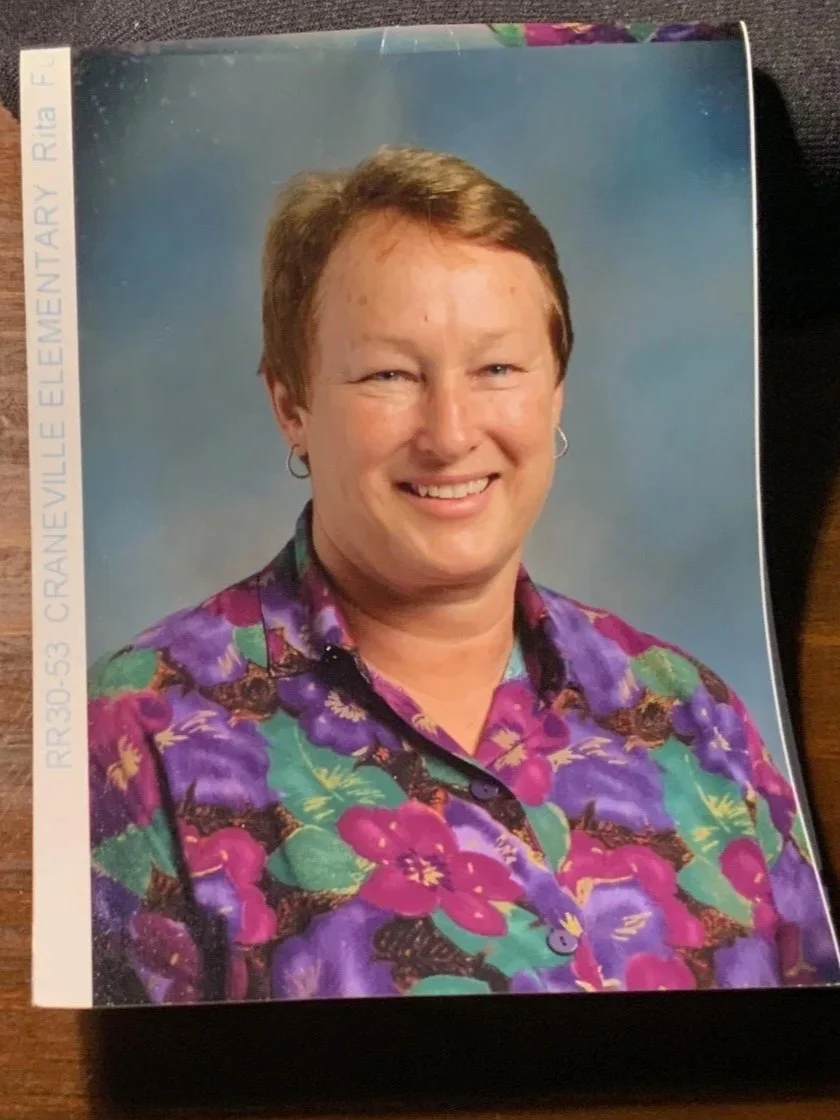
RITA MAY FURLONG
Audio
Time periods 1940s, 1950s, 1960s, 1970s, 1980s, 1990s, 2000s, 2010s, 2020s
Topics Family Roots, Childhood & Growing Up, Civic Life, Making a Living, The Land, Music & Performance, Coming Home
Transcript 2025 interview
Transcript—Rita May Furlong, 2026 interview
Rita May Furlong: My name is Rita May. And I have an Aunt Rita.
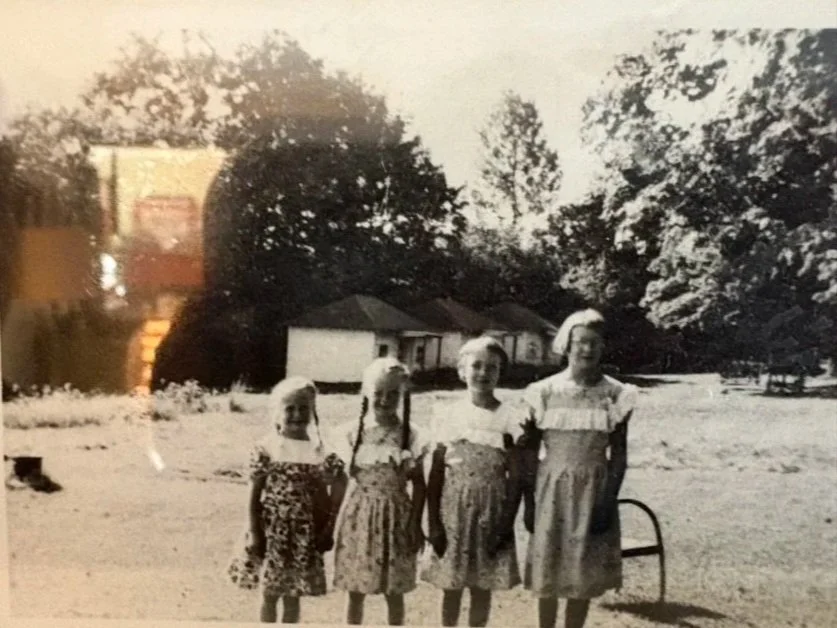
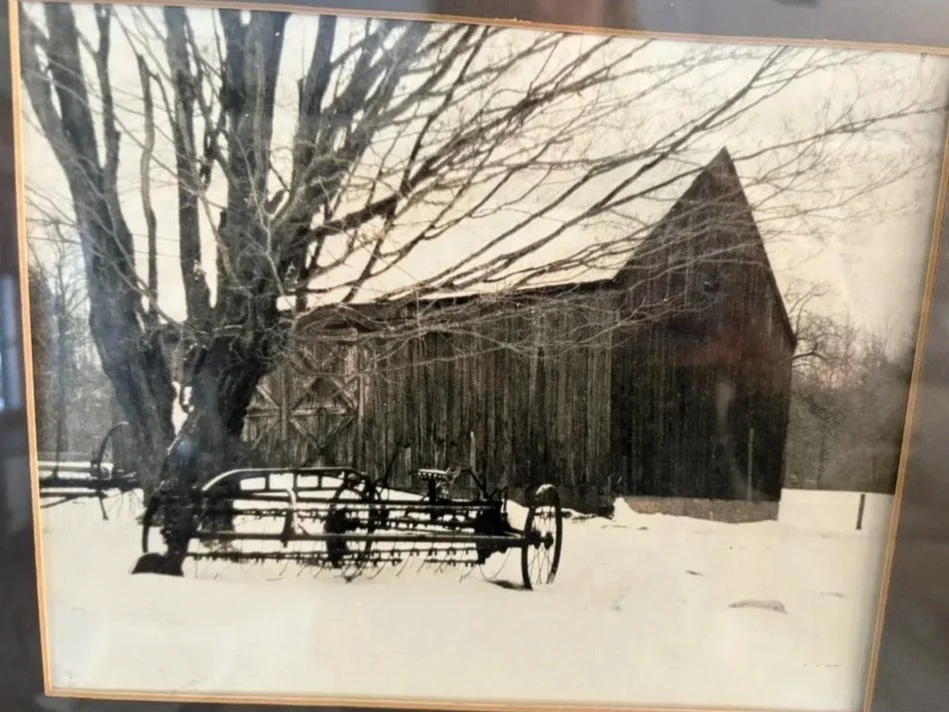
So she was Rita and I was Rita May and the family was kind of fun. , I grew up Rita May Frisbee, so I grew up down on the, where Gaetano's Farm is on Route eight. That was my family's farm. My dad bought that land around 1940 ish after struggling through the depression, and we grew up there and.
And initially, there was an outhouse, there was no inside bathroom. there were three cabins along there. Uh, it was called Maple Row and it was a girls' camp. And the house itself was just sort of a big downstairs. There were rooms upstairs, which just an open area.
So my parents put a bathroom up there and we, uh, four girls were born there and, um, grew up there and. it was before the age of television. It was before the age of phones, before the age of play dates and all of this. So you simply played with your sisters, which was wonderful.
I'm the second daughter and my father who worked down at the Bancroft paper mill, was also a farmer. We had dairy cattle and some growing, not, not prolifically. Becket is not known for its farmland per se, for agriculture anyway. Um, but the cows were fine and they supported us. Uh, we had chickens and things so.
The fun thing about growing up was my aunt was a musician and she gave all of us piano lessons. I ended up being the only one that. Took to it and, and we bartered for meat and eggs and milk for piano lessons, which I thought was a delightful, sensible way to approach things.
They had a family of five children, and so we had plenty of milk, plenty of eggs, and so it was a barter situation. We did have neighbors. There were the four Andrew Brothers down the road, but they were a little bit older than us in general, and so we just had ourselves as playmates.
So we fished, uh, the brook that goes down to Bonnie Rig corners is on the edge of the property. So we fished there. We built dams. Oh my God. Before the Conservation Commission was ever involved in life, we backed up and built stone dams so we could create a swimming pool. And just fished there and played there.
So we would be gone after we finished our chores of having to weed a row of green beans or something. We were on our own all summer and played down there and
I remember taking lunches with us. And we ate away from home. It was really, we were not back. My mother was not watching out the window watching every move we made. We were gone and showed up later in the day. I do remember catching my first fish down there and my dad was hanging or doing something on the farm area, and I was afraid to touch the fish to take it off the hook, so I had to run all the way up there.
For him to take it off the hook and, uh, and it turned out to be not big enough really, to keep and use this meat, and it was still alive, so I had to carry it. Then I learned to get over the squeamishness of doing that. Um, and so we just, uh, fished and played.
but talk about a wonderful childhood. Oh, yes. It was just tremendous. When I started high school at 13, we were on double sessions. We went to Dalton High School because it was the beginning of the formation of the re regional school district.
So, uh, the Dalton High School was mobbed and crowded. So we went morning, seven to noon approximately, and then the junior high kids would go in the afternoon. Um, and so. When we got back to Becket at noontime, uh, my best friend's father was the principal at the Becket School, and the classes were beginning to build population was building again in Becket, so teachers needed help.
So he hired. She and I to be sort of teacher's assistants for the afternoon. And I said, well, this is nice. I like working with children. So it certainly helped me develop that sense that teaching was the field for me.
my older sister married young and had children. I was the first in the family to go to college. So I remember it was $600 to go to college. I went to Westfield State. You know your choices back then. Well, you could be a teacher, a secretary, or a nurse.
Mm-hmm. Well, if you're a nurse, I didn't wanna kill anybody. And if as I was a secretary, I don't think I could have stood sitting still all day. So teaching was the one for me.
And my second and third sisters were also college graduates, and so my dad worked hard. They had his one luxury was a. A lot that he owned over on Goose Pond and when we were all in college, he had to sell that property to pay for our college. His one luxury in life was to do that, and it was just. Very magnanimous of him to do that.
Rita May Furlong: We as children did not use the phone, but, um. We really had to, at one point my mother was suffering from a kidney stone attack, and, and we had to get my father from the mill to come help. And so my sister and I just said, right, who's gonna touch the phone and do this? Who's gonna get brave? So we finally did, and, and the number was posted there.
That was a sensible enough. Precaution that my parents had taken. So when I called the mill and, and the secretary answered and I said, I, we need to talk to pa. And, and she said, now, which PA is that? And, and of course we named him William Frisbee. And he came on the phone and. We told him that she was dying of pain.
She was in horrible condition. So he ran home and, and the fun part was Dr. Bright, who was the town doctor. We actually had a town doctor lived on Maple Street next to the school where Becket's School is, and he came over and said, she thinks it's kidney stone. We need to get her to the hospital. And so we didn't.
And so we lived through that adventure, but honest to God, that really was our first effort to talk on the phone. F for, for whatever reason, because you didn't call your friends in those days. They were all out playing. No one was home and waiting by the phone or living with it as part of their lifestyle.
So it, so I went off to college. I did marry at 18 and committed to college for three years, and my name changed to Furlong. I married Richard Furlong, whose family was in the nursing home business. They owned the Maple View nursing home in Washington. The town of Washington. So I finished college. He, it was.
Vietnam war time. So he was drafted but chose instead to join the Navy. So when I graduated from college, we, bought a house in Washington. And I stayed there for the three years that he was on active duty. And when he got back I said, okay, it's your turn to go to school that I'll keep working.
Um, and it was a tremendous change of life. So we had our three children while we lived in the town of Washington. Moved to Westfield, um, because Richie was traveling over an hour a day to get from Washington to Westfield two times a day. So it's a couple of hours when you have a young family as a major decision you make.
That was not fun. You know, you want two of you to help raise children. So he, um, we moved to Westfield after eight years in Washington, we moved to Westfield.
we moved back to Becket after living in Westfield for only two years and saying we were, you know, 12 feet from another house, \ it wasn't comfortable, you know, you didn't, you, you couldn't. Yell at your child for being naughty or anything without people hearing.
And that was very uncomfortable. So we moved to Becket. , We moved back here, I was offered a halftime job at kindergarten in Becket, so I took it.
And so he stayed long enough to get the kids on the bus, and I was home in time for them to get off the buses later. So we raised children under those circumstances , Mothers were beginning to go to work, and so children kind of stayed home and did their thing. One day we live here on this hill with pine trees, very old pine trees.
And they climbed them for sport. It was awful. Their clothes were covered with pitch in their hands and everything, but they had a wonderful time up there pretending they were flying and so forth. And I did look out one day and all three of them were halfway up, a huge pine tree and this. We've named our house here, blueberry ledge because there were an abundance of blueberry bushes and there is ledge beyond belief.
And the pine trees were right on the ledge. So had they ever fallen, it would've been a serious, situation, but they didn't, . Their social life began really when, um, I ran a Girl Scout troop here in Becket. Um, we also had a four H group, so people gathered and I taught, as they said, halftime that first year.
After that, I taught full-time in Dalton for the rest of my career, but I still was home at relatively three 30 ish. Um, we always had dogs, and honest to God, we had a German short hair that would sit at the Stonewall that Stonewall separates our property from the town parade ground. And the dog sat right at the stonewall for when the kids got off the school bus.
he waited every day. How did they know it was three o'clock and the bus was going to come, but they did and he did. And he walked them up the driveway. And, uh, I was here shortly after that. So it was, they probably were alone for a little bit, but they were sensible. They, they didn't do dangers. They didn't climb the tree when I wasn't here.
But they grew up with, um, those particular activities, the four H group.
, That was a social activity. So we, we really, I grew up with guild and church and for h my children grew up with Girl Scouts and for h and sports things. Becket still had enough children then to do sports activities and my son did decide to do sports activities. So Richie and, and some other men ran a baseball group and, um, soccer really hadn't come into being, but that really ended up being my son's favorite sport in high school because by the time they went to high school.
Soccer had developed and it was such a inexpensive, sport to operate that it became very popular. And at that time in the next 10 years, the population in Becket began to dwindle. So today Becket does not have enough children to have a team of anything. So they have to commute to Hinsdale or Dalton for activities.
Their world began to expand more than mine had. But it meant a lot of driving for us, a lot of running around between. By the time all three of them were in high school together, and there only two of us, we had to pick which activity to go to. Um, we had to either go to swimming or soccer or, or baseball or, or track and field.
And it was like crazy. But they had a wonderful world and, and benefited from that and went on to great things. You know, they just have all become professional people who, um. Who benefited from living in the country. .